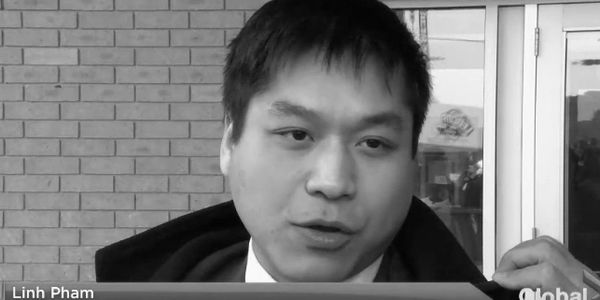
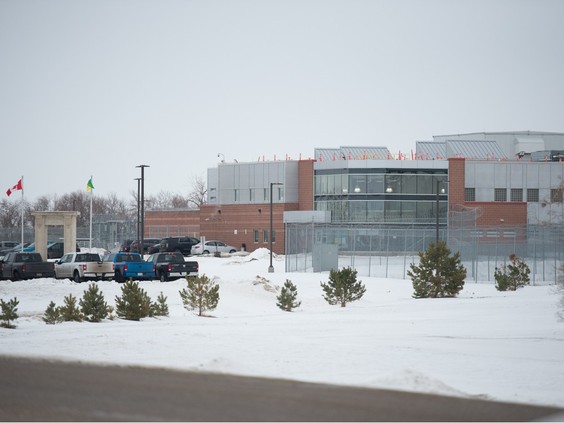
The Leader-Post heard from other lawyers who flagged challenges with client communication during the lockdown. Regina defence lawyer Linh Pham said he too had “issues” stemming from the recent multi-day lockdown. He wrote in an email that such lockdowns are “not merely administrative measures that create communication issues or inconveniences — they have direct constitutional implications.”
Pham wrote that courts have “consistently affirmed that Charter rights do not stop at the jailhouse door.”

“If institutional practices effectively prevent confidential communication with counsel, delay court access, or impair trial preparation, those are not inconveniences — they are constitutional concerns,” he wrote.“Public safety and institutional security are important, but they cannot come at the expense of fundamental legal protections.”

Pham said his client, who cried at times during the proceeding, is remorseful for his actions. Born and raised in Moose Jaw, Schoeffer has two children. Pham said his client retains the support of his family and regrets the time he’ll lose with them as a result of his crime.

The defence lawyer noted his client has accepted responsibility for his actions, but Pham pointed a finger at law enforcement as well.
“I submit there were multiple failures on the part of the Moose Jaw police and the RCMP with respect to searching Mr. Schoeffer to ensure he did not have any contraband on him,” he said. The judge suggested to Schoeffer that, whether addiction or financial gain drove his possession of drugs, he will need to reflect on his actions and take steps to avoid repeating his conduct upon release.

Criminal defence lawyer Linh Pham who regularly handles impaired-driving cases says the key change is that police no longer need reasonable suspicion before making a roadside breath-test demand.

Officers can still rely on reasonable suspicion to demand a breath sample, but since the law allows mandatory screening without having to point to any signs of impairment, why would they? “Is this an erosion of Charter rights? I would say it is because it allows them to request a breathalyzer sample without any evidence that there was wrongdoing,” Pham said.

Pham says he considers a breath sample as a search under the Charter, raising questions about the balance between public safety and individual rights. “A breath sample is a search of your body to determine how much alcohol is in your bloodstream,” he said. “That’s why there continues to be legal debate around this power.”

A judge’s questions to a man who was on trial in provincial court for sexual assault have led to a finding that the appearance of trial fairness was compromised. As a result, the Saskatchewan Court of Appeal has quashed a conviction and ordered a new trial for the man, referred to only as D.L. in the Aug. 21 ruling.

D.L. and his lawyers, Mervin Nidesh and Linh Pham, disagreed with that Court of King’s Bench decision and appealed it in Saskatchewan’s highest court. “I agree with D.L. that the summary conviction appeal judge erred in concluding that the trial judge’s questioning of him did not undermine trial fairness,” Drennan wrote.

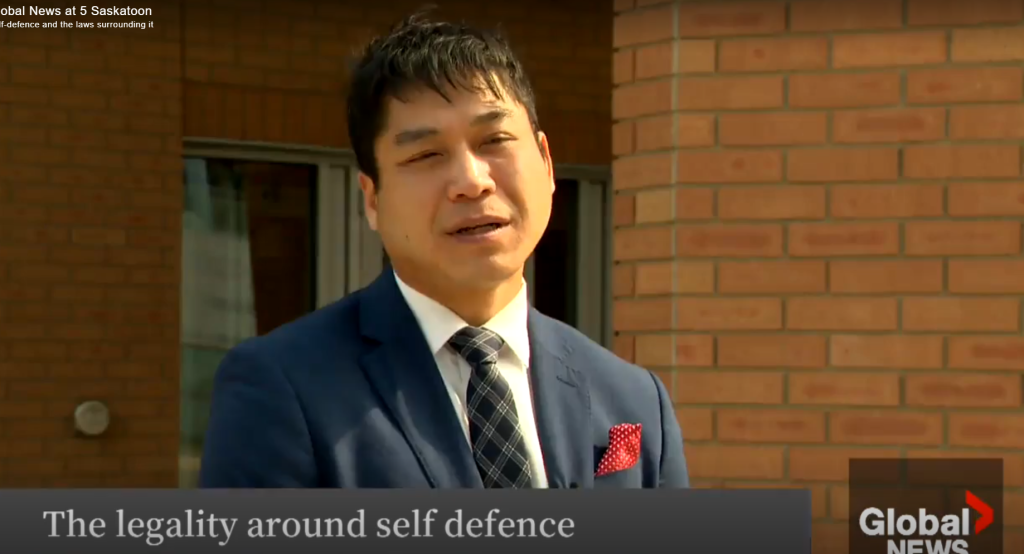
Criminal defence lawyer Linh Pham says self-defence claims have three elements.

“The first is the person has to have a reasonable grounds to fear that they’re getting assaulted or that they’re under threat,” Pham said. “The second element to a self-defence claim is their intent in acting. They must act to protect themselves or another. And the last consideration with regard to a self-defence claim is whether they acted reasonably. They have to act with reasonable force and not use excessive force.”  

Pham added that legally you aren’t permitted to carry a weapon even for self-defence purposes but added that using items in your surroundings is not off the table.

Saskatchewan’s highest court has overturned a Regina man’s convictions related to drug trafficking because the judges decided it’s possible the cocaine and cash belonged to someone else.

The previously-convicted man’s lawyers, Linh Pham and Mervin Nidesh, argued on appeal that the trial judge made mistakes, including failure to find reasonable inferences consistent with their client’s innocence. In this case, that meant failing to find that someone else may have been in possession of what was seized by police.

Thiong came to Canada from Ethiopia as a refugee in 2003 and completed high school in Windsor, Ont., said defence lawyer Linh Pham. He then moved to Brooks, Alta., for work, before eventually moving to Moose Jaw, where he worked as a DJ.

“There is the potential for him to make money in that area (based on his skills),” added Pham.

A joint submission between the Crown and defence saw the 35-year-old from Regina get the probation and conditional discharge, with defence attorney Linh Pham thanking the Crown prosecutor “for exercising restraint.”

Linh Pham, a lawyer with Merchant Law Group, said he has had many clients who deal with civil forfeiture applications.
Pham says those changes are concerning.
“[Policing for profit] is a strong term, but you’re inducing the police to seize people’s assets so that it’s profitable for them, so they can use that money for their own needs,” Pham said. “I just don’t think that’s appropriate.”

Noel Harder thought he was legally allowed to have a gun he’s banned from possessing and needed it for protection from imminent danger, according to his lawyer Linh Pham.
…|“Mr. Harder was under the significant imminent threat of individuals trying to hurt him and his family,” Pham said outside of court.
….
“It is not necessarily a dangerous purpose until a situation arises as such,” Pham said