
Getting a legal document in the mail can make your stomach drop. If you’ve received a subpoena, you probably have questions. What exactly is this paper? Do you really have to go? What happens if you don’t?
This guide walks you through everything you need to know about subpoenas in Canada, from what they are to what happens if you ignore one.
Understanding the Subpoena: Definition and Legal Power
A subpoena is not a polite request. It’s a legally binding court order requiring you to take specific action. Think of it as a command with teeth.
The “Order vs. Request” Distinction: Why a Subpoena is a Mandatory Court Command
When someone asks you to do something, you can say no. When a court orders you to do something through a subpoena, refusing has real consequences. The document carries the full authority of the justice system. Treat it like you would treat a direct instruction from a judge, because that’s essentially what it is.
The Three Pillars of a Subpoena: To Testify, to Produce Documents, or Both
A subpoena will ask you to do one of three things. You might need to appear in court and answer questions under oath. You might need to hand over specific documents or records. Or you might need to do both. The paperwork will spell out exactly what’s required of you, so read it carefully.
Who Has the Authority to Issue Them (Judges, Lawyers, or Court Clerks)
In Canada, subpoenas can come from different sources depending on the type of case and where it’s being heard. A judge can issue one directly. Lawyers representing parties in a lawsuit can often issue them as well, particularly in civil cases. Court clerks may also have the authority to prepare and issue subpoenas on behalf of the court. The specific rules vary by province and the type of proceeding.
The Concept of “Under Penalty”: The Latin Roots and Legal Weight Behind the Document
The word “subpoena” comes from Latin, meaning “under penalty.” That’s not just historical trivia. It tells you what the document really means: comply or face consequences. This isn’t a suggestion or an invitation. It’s a command backed by the power to penalize you if you don’t follow through.
Subpoena vs. Summons: Knowing Which Document You Have
People often confuse subpoenas with summonses, but they serve different purposes. Getting the wrong one mixed up can lead to serious problems.
The Defendant vs. The Witness: Identifying if You Are Being Sued/Charged or Just Providing Evidence
A summons typically goes to someone who is a party to the legal action. If you’re being sued or charged with something, you’ll likely get a summons. A subpoena, on the other hand, usually goes to witnesses or people who have evidence. If you’re not involved in the dispute but have information relevant to it, you’re probably looking at a subpoena. Check the document carefully to understand your role.
Service Methods: Personal Delivery by a Process Server or Peace Officer vs. Mail/Email
How the document reaches you matters. A summons in a serious case often requires personal service, meaning someone hands it to you directly. This might be a process server or a police officer. Subpoenas can sometimes be served more casually, through regular mail or even email in certain circumstances, though the rules vary. Keep the envelope and any delivery confirmation, as you may need proof of when you received it.
Different Legal Consequences: Default Judgments (Civil) vs. Arrest Warrants (Criminal/Witness)
Ignore a summons in a civil lawsuit, and the court might issue a default judgment against you, meaning you lose automatically. Ignore a summons to appear on criminal charges, and a warrant for your arrest will likely follow. Ignore a subpoena, and you could face a warrant as well, along with contempt charges. All of these documents are serious. None should be thrown in a drawer.
Court documents like subpoenas often arise alongside bail matters, where a release order outlines enforceable legal obligations.
The Three Main Types of Subpoenas in Canadian Law
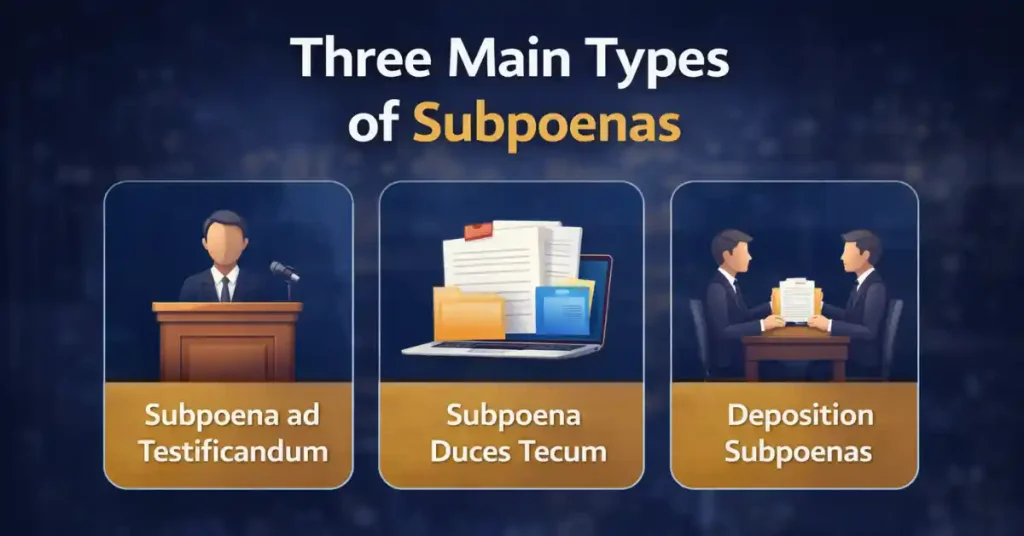
Canadian courts use specific terminology for different kinds of subpoenas. You might see Latin phrases on your paperwork. Here’s what they mean.
Subpoena ad Testificandum: The Requirement for Oral Testimony Under Oath
This type of subpoena orders you to show up and speak. You’ll be questioned under oath, meaning you swear to tell the truth. Your answers become part of the official court record. This is the most common type of subpoena witnesses receive.
Subpoena Duces Tecum: The “Bring With You” Order for Physical Evidence or Digital Records
“Duces tecum” translates to “bring with you.” This subpoena requires you to produce specific documents, records, emails, photos, or other physical evidence. The document should list exactly what you need to bring. If it’s vague or you’re not sure you have what they’re asking for, you may want to contact the lawyer who issued it or seek legal advice.
Deposition Subpoenas: Providing Testimony Outside of the Courtroom During the Discovery Process
Not all testimony happens in front of a judge. During the discovery phase of a lawsuit, lawyers gather information from witnesses through depositions. A deposition subpoena orders you to answer questions in a lawyer’s office or another location, not in open court. Your answers are recorded and can be used later at trial. Even though it feels less formal, you’re still under oath, and the same rules apply.
Real-World Experience: What Actually Happens on Court Day
Walking into a courthouse for the first time can feel overwhelming. Here’s what to expect so you’re not caught off guard.
The Waiting Game: Why You Must Arrive 30 Minutes Early but May Wait All Day Outside the Courtroom
Court schedules are unpredictable. Cases run long, witnesses don’t show up, and lawyers need to confer with judges. You might be told to arrive at 9 a.m. and not get called until 3 p.m. Bring something to read. Make sure your phone is charged. Plan for a full day, even if you think your part will only take 20 minutes. Showing up late because you assumed it would be quick is not an excuse the court will accept.
Courtroom Etiquette: Turning Off Electronics, Removing Headwear (Unless Religious), and the “No Food or Drink” Rule
Before you enter the courtroom, silence your phone completely. Not vibrate. Off or silent. Take off your hat or cap unless it’s for religious reasons. Don’t bring coffee, water bottles, or snacks inside. The court takes decorum seriously. Dress like you would for a job interview. Clean, respectful clothing shows you understand the seriousness of the proceedings.
Choosing Your Oath: Options for Swearing on a Bible, an Eagle Feather, or Making a Non-Religious Affirmation
When it’s time to testify, you’ll be asked how you want to take your oath. You can swear on a Bible if you’re Christian. Indigenous witnesses may choose to swear on an eagle feather or another sacred object. If you’re not religious or prefer not to swear on a religious item, you can make a simple affirmation promising to tell the truth. All options carry the same legal weight.
The “Exclusion Rule”: Why You Are Forbidden From Discussing Your Testimony With Other Witnesses While Waiting
If the court orders witness exclusion, you cannot talk to other witnesses about the case while you’re waiting to testify. You can’t compare notes, discuss what questions you were asked, or coordinate your stories. This rule exists to keep testimony independent and honest. Breaking it can get you into serious trouble.
Advanced Tips: Protecting Your Rights as a Witness
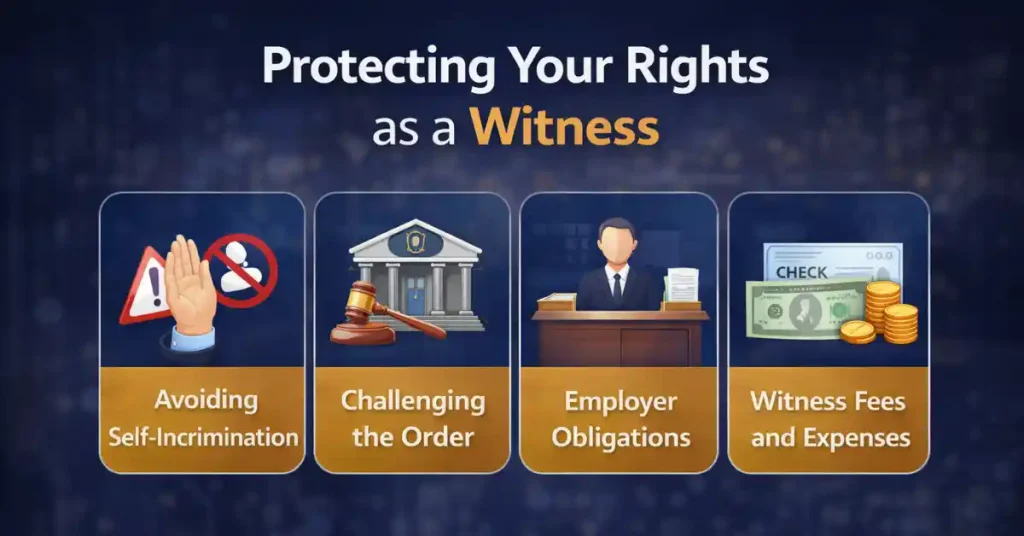
Being subpoenaed doesn’t mean you’re powerless. You have rights and protections under Canadian law.
Avoiding Self-Incrimination: How to Ask the Judge for Protection Under the Canadian Evidence Act
You have to answer questions truthfully, but you don’t have to answer if doing so would incriminate you in a crime. If a question puts you in that position, you can ask the judge for protection. Section 5 of the Canada Evidence Act prevents your testimony from being used against you in most criminal proceedings. But you need to claim this protection before you answer. If you think this might apply to you, speak with a lawyer before your court date.
Challenging the Order: Valid Grounds for Objection, Such as “Undue Burden” or “Privileged Information”
You can ask the court to cancel or modify a subpoena if you have a legitimate reason. Maybe complying would cause you serious financial hardship or health problems. Maybe the documents being requested are protected by solicitor-client privilege or another legal protection. Maybe the subpoena asks for information that has nothing to do with the case. These are valid grounds to challenge it, but you need to act quickly and usually with help from a lawyer.
Employer Obligations: Your Right to Job Security vs. Your Lack of Right to a Regular Paycheck While in Court
Your employer cannot fire you for attending court when you’ve been subpoenaed. That’s protected by law. However, most employers don’t have to pay you for time spent testifying unless your employment contract or union agreement says otherwise. Some provinces have specific rules about this. Check your local employment standards or speak with your HR department.
Witness Fees and Expenses: How to Claim Mileage, Travel, and the Mandatory “Witness Fee” in Civil Cases
If you’re subpoenaed in a civil case, you’re entitled to a witness fee. This is usually a modest daily amount plus travel expenses like mileage or public transit costs. The fee won’t replace a day’s wages, but it’s something. Ask the lawyer who subpoenaed you about the process for claiming these fees. Get receipts for everything.
The High Cost of Non-Compliance: Risks of Ignoring the Order
Pretending a subpoena doesn’t exist won’t make it go away. The consequences for ignoring one are real and immediate.
Warrants for Arrest: When a “Peace Officer” is Authorized to Take You Into Custody
If you don’t show up when you’re supposed to, the court can issue a warrant for your arrest. A police officer can then pick you up and bring you to court, possibly in handcuffs. This isn’t a scare tactic. Courts have the power to do this, and they use it when witnesses fail to appear.
Contempt of Court: Understanding the Potential for Fines or Incarceration
Defying a court order counts as contempt of court. The judge can fine you or, in serious cases, send you to jail until you agree to comply. Contempt is not a criminal charge in the traditional sense, but it gives the court direct power over you. The punishment can be swift and doesn’t require a separate trial.
Financial Penalties: Responsibility for the Opposing Party’s Legal Costs in Civil Matters
In civil cases, ignoring a subpoena might force one side to delay the trial or hire investigators to track you down. The court can order you to pay those extra costs. Legal bills add up fast. What starts as avoiding an inconvenient court date can turn into thousands of dollars in fees you’re responsible for.
Frequently Asked Questions about Subpoena
1. What happens if I ignore a subpoena in Canada?
Ans- Ignoring a subpoena can result in a warrant for your arrest, contempt of court charges, fines, or even jail time. The court has the power to compel your attendance and will use it. If you can’t comply for a legitimate reason, contact the lawyer who issued the subpoena or the court immediately to explain your situation.
2. Can I be fired for attending court after being subpoenaed?
Ans- No. Canadian employment law protects you from being fired for complying with a subpoena. Your employer must allow you time off to fulfill your legal obligation. However, they are generally not required to pay you for that time unless your employment contract or collective agreement says otherwise.
3. Who pays for my travel and time if I am subpoenaed?
Ans- In civil cases, you are entitled to a witness fee and reimbursement for reasonable travel expenses like mileage or transit fares. The amount varies by province and court. Ask the lawyer who served you with the subpoena for details on how to claim these fees. In criminal cases, witness compensation works differently and may be more limited.
4. What is the difference between a subpoena and a summons to witness?
Ans- The terms can be confusing because they’re sometimes used interchangeably. Generally, a summons notifies someone that they are a party to a legal action, either as a defendant or an accused person. A subpoena orders someone to appear as a witness or produce documents. If you’re not being sued or charged but are being asked to provide evidence, you likely have a subpoena.
5. Do I need my own lawyer if I receive a subpoena?
Ans- You don’t automatically need a lawyer just because you received a subpoena, but there are situations where getting legal advice makes sense. If you’re worried about self-incrimination, if the subpoena asks for confidential or privileged information, if complying would be extremely burdensome, or if you simply don’t understand what’s being asked of you, talk to a lawyer. Many offer free or low-cost consultations.
6. Can a subpoena be served by email in Canada?
Ans- Rules about electronic service vary by province and type of proceeding. Some courts now allow service by email if certain conditions are met, such as prior consent or court permission. However, personal service is still the most common method, especially for important documents. If you receive what appears to be a subpoena by email and you’re unsure if it’s valid, contact the court or a lawyer.
7. What should I wear to court as a witness?
Ans- Dress conservatively and respectfully. Think business casual at minimum. Clean pants or a skirt, a collared shirt or blouse, and closed-toe shoes. Avoid anything too casual, like shorts, flip-flops, tank tops, or clothing with offensive slogans. You don’t need to wear a suit unless you want to, but you should look like you’re taking the proceeding seriously.
8. What is perjury, and what are the penalties?
Ans- Perjury means lying under oath. If you deliberately provide false testimony in court, you can be charged with a criminal offence. The maximum penalty for perjury in Canada is 14 years in prison, though sentences vary based on the seriousness of the lie and its impact on the case. Even if you’re not charged criminally, lying in court destroys your credibility and can affect the outcome of the case. Always tell the truth.